
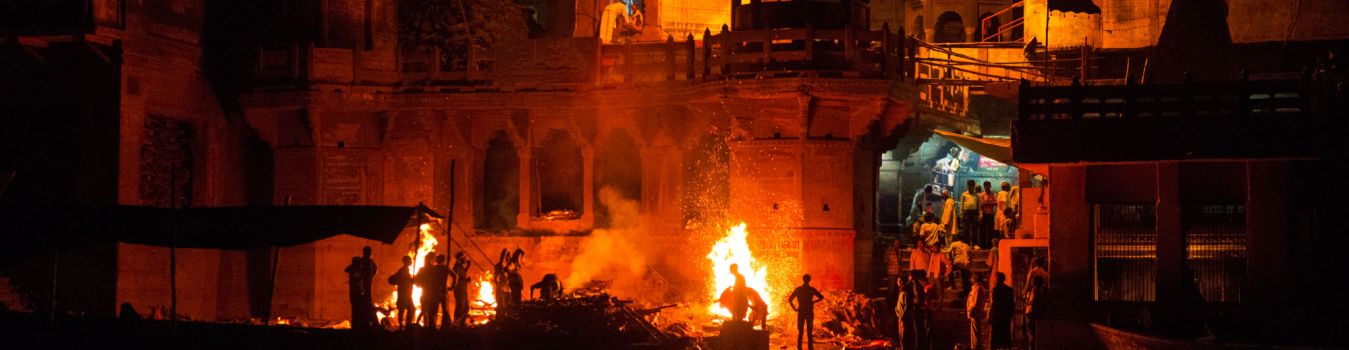
Manikarnika Ghat (Burning Ghat)
GhatsManikarnika Ghat, also known as the 'Great Cremation Ghat', is perhaps the most confrontational and philosophically profound site in Varanasi. It is where the 'Eternal Fire' has burned continuously for thousands of years, as thousands of Hindus believe that being cremated here grants instant 'Moksha' (liberation from the cycle of rebirth). The ghat is named after Sati's earring (Manikarnika) which fell into a sacred well (Kund) here. While it may seem jarring to those unfamiliar with Hindu traditions, the ghat is a place of profound peace for believers, serving as an ultimate reminder of the impermanence of life and the city's role as the threshold between the earthly and the divine.
Experience Manikarnika Ghat (Burning Ghat) in Motion
Videos courtesy of YouTube. Explore more of Kashi through our curated visual guide.
Frequently Asked Questions
Is it respectful for tourists to watch cremations at Manikarnika Ghat?
Watching from a distance is allowed, but visitors should maintain absolute silence and avoid any behavior that could be seen as gawking or disrespectful to the grieving families.
Are photos allowed at Manikarnika Ghat?
No, photography and videography are strictly prohibited at the cremation areas out of respect for the deceased and their families.
Why is Manikarnika called the 'Eternal Fire'?
According to tradition, the fire at Manikarnika Ghat has never been extinguished for thousands of years, as new pyres are continuously lit from the existing embers.
Which is the best ghat for the evening Ganga Aarti?
Dashashwamedh Ghat is the primary and most spectacular location for the evening Ganga Aarti, though smaller versions occur at Dr. Rajendra Prasad Ghat and Assi Ghat.
How many ghats are there in Varanasi?
There are officially 84 ghats in Varanasi, spanning roughly 6.5 kilometers along the western bank of the Ganges.