
Magh Mela - Essential Spiritual Experience in Kashi, Varanasi

Magh Mela

Temples
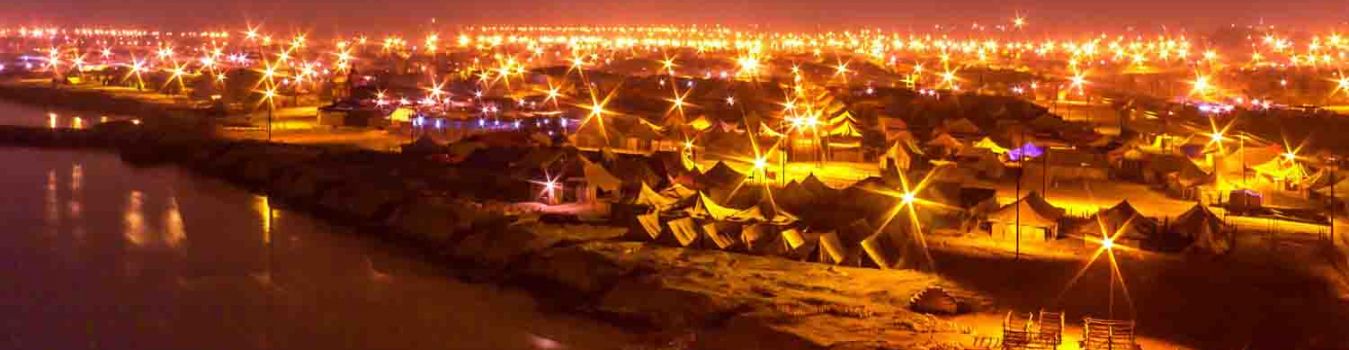
Magh Mela is an annual month long bathing festival that takes place in holiest city for the Hindus - Tirthraj Prayag or Allahabad - in the month of 'Magh'. The month of Magh corresponds to the latter half of January and the first half of February according to the Gregorian calendar. Magh is considered to be the holiest month of the Hindu calendar. Magh Mela is, by far, the largest annual bathing festival in India attracting lakhs of pilgrims from all over the country. The visitors to the Magh Mela include sadhus, saints, seers and pilgrims. The Magh Mela begins on Paush Purnima and ends on Magh Purnima. However, Makkar Sankaranti and Maha Shivaratri form part of the Magh Mela celebrations. The Magh festival is marked by ritual bathing in the river Ganga or at the confluence of the rivers Ganga, Yamuna and the mythical river Saraswati called 'Sangam.'The Sangam and the Melakshetra witnesses a sea of humanity during the Magh Mela. The three most important activities at the Magh Mela are: While most pilgrims come for a quick holy dip at the Sangam, many committed devotees camp at the Magh Mela for month long Kalpavas. The preparations for Magh Mela begins some 90 days before the The Magh (Kumbh) Mela is one of the greatest annual religious fair for Hindus. Hindu mythology considers the origin of the Magh Mela to be the beginning of the Universe. An important occasion, the Magh (Kumbh) Mela is held every year on the banks of Triveni Sangam (the confluence of the three great rivers Ganga, Yamuna and Saraswati) in Prayag near Allahabad in Uttar Pradesh. In accordance with the traditional Hindu calendar followed in North India, this holy fair "The Magh Mela" is, however, not confined only to the month of Magh and the important bathing dates are spread over a period of 45 days. The Magh Mela is actually a smaller version of Kumbh Mela. Hence it is also known as mini Kumbh Mela. Every year, the Magh Mela commences on the day of Makkar Sankranti in January, which is the first important bathing day according to the religious Hindu calendar. It begins with multitudes of pilgrims taking a holy dip at the Sangam on auspicious dates. A large number of people arrive here annually and stay in makeshift houses or tents at the Sangam, spending the entire month of Magh in prayers. This period is known as "Kalpvas". Those who religiously observe the "Kalpvas" are known as "Kalpvasis". The ancient Hindu Vedas mention a "Kalp" to be the period equal to the total number of years in the four yugas - Satyug, Treta, Dwapar and Kalyug. This adds up to several millions of years. It is said that by piously observing a "Kalpavas", a devotee overcomes the sins in his/her previous birth and escapes the cycle of Janma(birth) and Karma (actions). During each day of the Magh Mela, a Kalpvasi has to take a dip at the Ganges on sunrise praying to the rising sun. Majority of the Kalpvasis partake only a meal a day. After observing 12 Kalpavas, a Kalpavasi has to donate his/her bed and all his belongings (a ritual known as "Shayya Daan"). The Uttar Pradesh government annually makes special arrangements for the devotees during this time. A greater number of buses ply to let the pilgrims have their journey in peace and without any inconvenience. A township of tents specially come up on the banks of the Sangam to provide shelter to the visiting millions who turn up from all over the country. Adequate medical and security arrangements are made to avoid any untoward incidents. "Lost and Found" camps are also set up and manned by the local police to prevent anyone getting missing during the days of the fair. Every twelfth year, the Magh Mela is transformed into the Kumbha Mela. Uttar Pradesh is flooded with millions of pilgrims who arrive here during this time to attend this grand event. Magh Mela, Allahabad Main/Special Bathing Dates

Experience Magh Mela in Motion

Videos courtesy of YouTube. Explore more of Kashi through our curated visual guide.

Frequently Asked Questions

What are the darshan timings for this temple?

Most temples in Varanasi open early in the morning around 4:00 AM and close by 10:00 PM. It is best to visit during the morning aarti or evening aarti.

Is there an entry fee?

No, entry to most temples in Varanasi is free. However, special pooja or expedited darshan lines at the Kashi Vishwanath Temple may have a fee.

What is the dress code?

Devotees are requested to wear modest clothing. Shoulders and knees should be covered. In some ancient temples, traditional dhotis for men and sarees for women are preferred.

Are cameras allowed inside?

Photography is generally restricted inside the inner sanctum of major temples. Please check with security at the entrance. In the Kashi Vishwanath corridor, mobile phones are strictly prohibited.

Can foreigners enter the temples?

Yes, most temples in Varanasi are open to all regardless of nationality. However, the inner sanctum of some private family temples might have restrictions.