
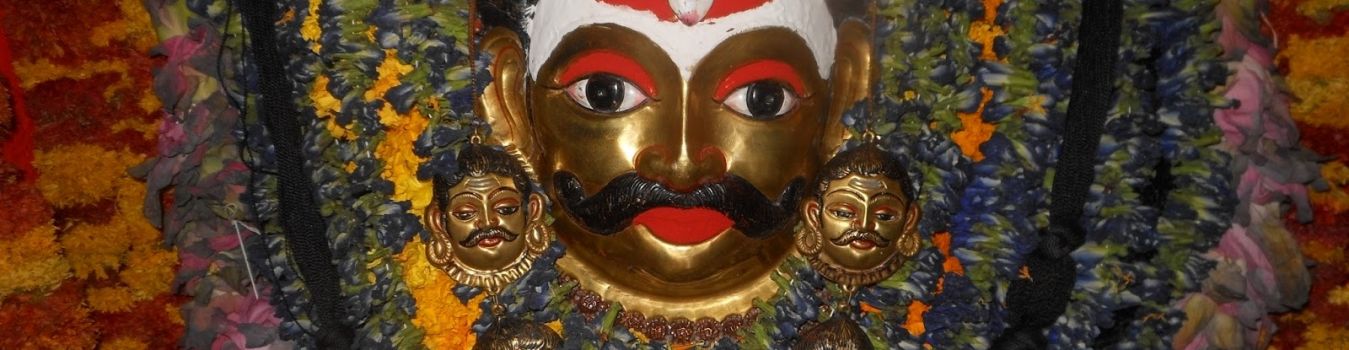
Kaal Bhairav Temple - Essential Spiritual Experience in Kashi, Varanasi

Kaal Bhairav Temple

Temples
वाराणस्यां भैरव: देव: संसार भयनाशनम्। अनेक जन्म कृत पापं दर्शनेन विनश्यति।। Bhairav Dev of Varanasi make individuals fearless of the fear of the world, and the sins committed during various births, get washed away just by pilgrimage. Due to their pilgrim-worship, disease and sins are eradicated. Sorrows and problems are removed; people get peace and prosperity and achieve happiness and eternal satisfaction.   It is known as the most ancient temple of Varanasi located near the VishesharGanj. Kalbhairav temple is located at K-32/22 Bharonath, Vishweshwarganj, Varanasi. God KalBhairav is believed to be the “Kotwal of Sati pind”. Without his permission no one can even touch to the Sati pind. Opening time of the temple is: 5:00 am to 1:30 pm and 4:30 pm to 9:30 pm History of the Kalbhairav Temple: Long ago many great saints went to the Sumeru Mountain in order to know from Lord Brahma that who is eternal and supreme power. Lord Brahma stated that he was the superior person. Lord Vishnu (also known as the Yagyeshwar or Narayan) was not agreed with the quick and impudent decision of the Lord Brahma. Both, Lord Brahma and Lord Vishnu went to the four Vedas for the answer of same question. Rig Veda answered that the Rudra is supreme as He has the power to control all living beings. Yajur Veda answered that Lord Shiva is supreme as He could be worshiped by various Yagnas (Yagam). Sam Veda declared that Triambakam is supreme as He is worshipped by a variety of Yogis and can control the entire world. Atharva Veda answered that Lord Shankar is supreme as He can eliminate all the troubles of human beings. All of the four Vedas declared that Lord Shiva is the ultimate supreme. Both, Lord Brahma and Lord Vishnu laughed on the decision of Vedas. Soon, Lord Shiva came as a powerful divine shine in their center. Lord Brahma was staring very angrily at that shine with his 5th head. Lord Shiva has instantly created the new being (known as the king of Kaal means Kaal Bhairav). Lord Shiva said that Kaal Bhairav will forever be in Kashi in order to remove sins of the disciples, that’s why Kaal Bhairav is also known as Paap Bhakshak. In the meantime, Kaal Bhairav plucked the burning head with anger of Lord Brahma and devotees started praying Lord Shiva. Lord Shiva said to Kaal Bhairav to go to various places but Brahma Hatya Dosh was following him. Brahma Hatyia (a female stature) created by Lord Shiva was following Kaal Bhairav at every places. Finally, he reached to Kashi, also known as the Moksha Puri in the world. Brahma Hatya has finally vanished as soon as Kaal Bhairav has entered to the Kashi. The Lord Brahma’s head (held by Kaal Bhairav) fell at the ground known as Kapal Mochan and the place famed as the Kapal Mochan Teerth. From that day onwards, Kaal Bhairav stayed at Kashi forever and protects devotees from their problems. Even upasakas of Devi i.e. Shaktas undertake this Yatra as Bhairava's grace is essential in Tantric Upasana. One should then worship Kala Bhairava and feed dogs. One should also try to worship:

Experience Kaal Bhairav Temple in Motion

Videos courtesy of YouTube. Explore more of Kashi through our curated visual guide.

Frequently Asked Questions

What are the darshan timings for this temple?

Most temples in Varanasi open early in the morning around 4:00 AM and close by 10:00 PM. It is best to visit during the morning aarti or evening aarti.

Is there an entry fee?

No, entry to most temples in Varanasi is free. However, special pooja or expedited darshan lines at the Kashi Vishwanath Temple may have a fee.

What is the dress code?

Devotees are requested to wear modest clothing. Shoulders and knees should be covered. In some ancient temples, traditional dhotis for men and sarees for women are preferred.

Are cameras allowed inside?

Photography is generally restricted inside the inner sanctum of major temples. Please check with security at the entrance. In the Kashi Vishwanath corridor, mobile phones are strictly prohibited.

Can foreigners enter the temples?

Yes, most temples in Varanasi are open to all regardless of nationality. However, the inner sanctum of some private family temples might have restrictions.