
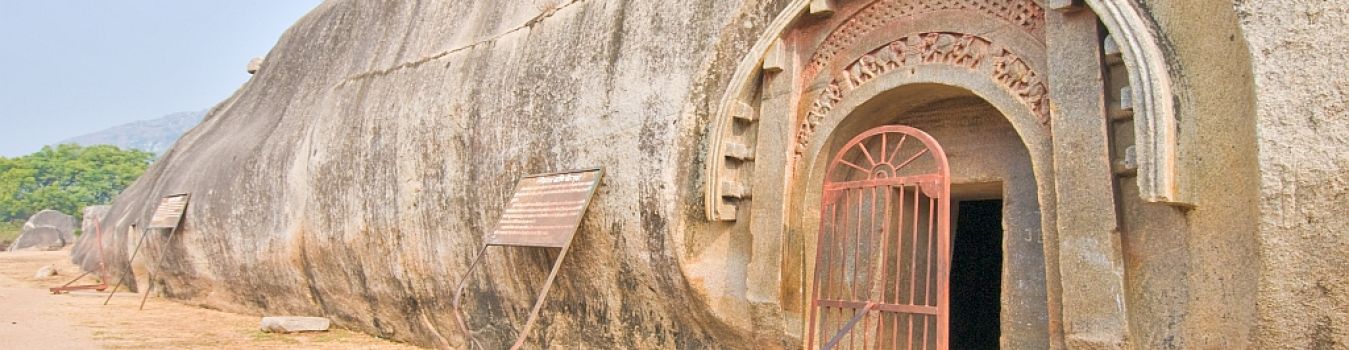
An excellent spot that reaches out to the hearts of those who love anything ancient, Barabar Caves date back to Mauryan era that span between 322 BC and 185 BC. They proudly hold the top rank of being the most ancient surviving rock-cut caves in the land. Four caves comprise Barabar caves out of which the most fascinating caves are Lomas Rishi caves. Its construction shares similarity to wooden huts, which were home to Buddhist monks. Lomas Rishi caves are the oldest of all rock-cut caves as well and they influenced many to come in the following centuries. The Hindu sculptures and Jain sculptures found in the caves date back to 273 BC to 232 BC. The inscriptions on the walls depict the history and growth of Buddhism.
The special feature of these caves is that their cuttings are so wonderfully sharp that they draw parallels to the laser cuttings of the present times. In short, Barabar caves not just delight but stun architecture minds.
Experience Barabar Caves in Motion
Videos courtesy of YouTube. Explore more of Kashi through our curated visual guide.
Frequently Asked Questions
What are the darshan timings for this temple?
Most temples in Varanasi open early in the morning around 4:00 AM and close by 10:00 PM. It is best to visit during the morning aarti or evening aarti.
Is there an entry fee?
No, entry to most temples in Varanasi is free. However, special pooja or expedited darshan lines at the Kashi Vishwanath Temple may have a fee.
What is the dress code?
Devotees are requested to wear modest clothing. Shoulders and knees should be covered. In some ancient temples, traditional dhotis for men and sarees for women are preferred.
Are cameras allowed inside?
Photography is generally restricted inside the inner sanctum of major temples. Please check with security at the entrance. In the Kashi Vishwanath corridor, mobile phones are strictly prohibited.
Can foreigners enter the temples?
Yes, most temples in Varanasi are open to all regardless of nationality. However, the inner sanctum of some private family temples might have restrictions.